
Biography 2
1949 — 1958 Youth
Following Japan’s postwar educational reform in 1949, Hachidai moved from Kurume to Tokyo and transferred to Waseda Senior High School. By then, the first signs of a jazz boom were emerging in the capital, and he soon began making guest appearances with newly formed dance bands such as Yasuhiko Taniguchi and His Premier Swing, as well as the popular student combo The Red Hat Boys.
His involvement was likely due in part to the presence of senior students from Waseda Senior High School, including trumpeter Charlie Ishiguro and tenor saxophonist Heita Watanabe, as well as an invitation from his older brother Nidai, who played clarinet in Waseda University’s Light Music Club. The Red Hat Boys had been formed in 1946 around Keio University guitarist Yoshihiro Sasayama. Its early members included Akira Tanabe on clarinet from Nihon University and Jiro Kubota on drums from Hosei University. After Tanabe and Kubota left in 1948 to form The Gramercy Five, the group’s personnel changed frequently, and Hachidai, already recognized as a talented high school student, was invited to join. At this stage, however, he was still performing only on a part-time basis. Incidentally, the group’s pianist in 1950 was the brilliant but tragically short-lived Shotaro Moriyasu.
Hachidai also performed with the band led by Yonosuke Kawaguchi, whose son would later become the legendary drummer George Kawaguchi, a founding member of The Big Four.
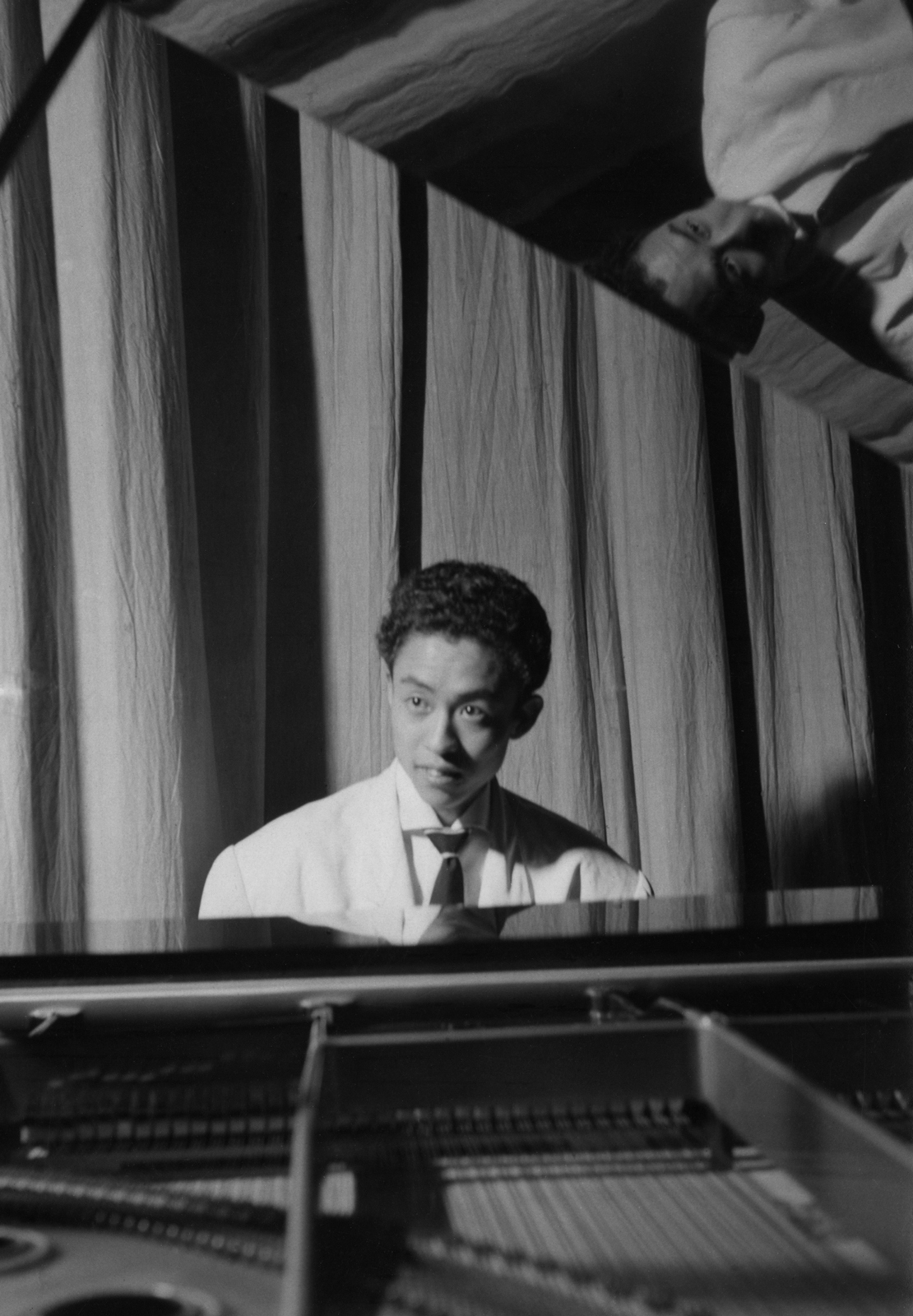
Around the same time, word of Hachidai’s talent reached Shin Watanabe, a bassist at Waseda University. Beginning around 1949, Watanabe and drummer Shozo Terada performed at U.S. military camps before forming Five Joes & A Jane following an engagement at the Butterfly Club in Shinagawa in April 1950. That same year, Hachidai entered Waseda University’s Faculty of Letters and, through an introduction from his brother, joined the group, effectively launching his professional career.
The original lineup consisted of Shin Watanabe (bass), Tomoo Miyakoshi (alto saxophone), Kazutaka Someya (tenor saxophone), Shozo Terada (drums), Hachidai Nakamura (piano), and vocalist Sayoko Kasahara. Hachiro Ando (vibraphone) joined the group in May, followed by guitarist Isao Tsuboi in September.
In 1951, the group underwent major personnel changes. Hiroshi Minami (drums), Kyozo Miyagawa (guitar), Yukinaga Igawa (tenor saxophone), and Tatsuro Watanabe (alto saxophone) joined the band, and in May the new lineup began performing at the U.S. Officers’ Club in Shinjuku. Following an engagement at the Zanzibar nightclub in Yokohama that October, the band reorganized once again, changing its name to Shin Watanabe and the Six Joes, a play on the phrase “six skillful Joes.” Tenor saxophonist Hidehiko Matsumoto replaced Igawa.
With “September in the Rain” as their theme song, the Six Joes embraced the George Shearing style. Hachidai’s cool, meticulously crafted arrangements, combined with Matsumoto’s powerful tenor saxophone, created a distinctive sound that was uniquely their own. In January 1952, the band began appearing regularly at the prestigious Ginza nightclub Hato. Later that year, a performance at the Swing Concert held at Yomiuri Hall, arranged through jazz critic Teruo Sono, firmly established their popularity. The group finished second in the combo category of Swing Journal magazine’s second annual readers’ poll and rose to first place in the third poll in 1953.
In August 1952, Victor Records released Hachidai’s first published composition, “Broken-Hearted Pigeon,” performed by Shin Watanabe and the Six Joes. It was paired on a 78-rpm record with “Green House Party,” composed by Seiichi Mawatari and performed by the Swing Journal All-Stars, as part of a special project organized by Swing Journal. Although it was a promotional release, the decision to record a composition by the still relatively inexperienced Hachidai demonstrated Shin Watanabe’s remarkable eye for talent. It foreshadowed the keen judgment that would later make him one of Japan’s most influential entertainment producers through the founding of Watanabe Productions.
“They played George Shearing tunes such as “Local 802 Blues” and “Strolling” just like the original recordings. I still remember being astonished by both the quality of the ensemble and the excellence of the solo performances. There wasn’t even a chair in the band’s dressing room, so Hachidai Nakamura offered me one of his sandals, saying, ‘Please, have a seat on this.’”
— From History of Japanese Jazz by Koichi Uchida
Meanwhile, George Kawaguchi and Mitsuru Ono were performing with The Gay Septet, Japan’s first full-fledged postwar jazz combo. The group had evolved from Shigeo Iiyama and the Gay Six, which had been active in Osaka. Bandleader Shigeo Iiyama assembled the combo by recruiting leading musicians from the Shochiku Light Music Orchestra. In 1947, the group relocated to Tokyo and became the resident combo at the Esquire Club in Kojimachi. George Kawaguchi joined in 1949, followed by Mitsuru Ono the following year. They performed primarily at the Bankers Club in Marunouchi and at hotels serving U.S. military personnel, and were awarded the prestigious “Special A” rating by the Musicians’ Union. This ranking system, introduced under the GHQ occupation authorities, regulated musicians’ fees by assigning payment vouchers according to rank, which were later exchanged for cash.
Despite their busy schedule with The Gay Septet, the musicians continued performing late into the night. George Kawaguchi, pianist Francisco Keiko, and clarinetist Raymond Conde appeared as a trio at Maxim in Nihonbashi, while Mitsuru Ono, Hidehiko Matsumoto of the Six Joes, and U.S. Army Lieutenant De Court performed as another trio at the Alaska Restaurant in Kyobashi.
Around this time, Kawaguchi and Ono were invited to form a special combo for radio broadcasts. They recruited Matsumoto and Hachidai from the Six Joes, and Kawaguchi named the new quartet The Big Four. Featuring four of the most popular musicians from Japan’s two leading jazz combos, the group quickly attracted widespread attention. They became regular performers on Radio Tokyo programs such as Evening Concert and Swing Hall, marking the beginning of one of the most celebrated collaborations in the history of early Japanese jazz.
“At first, we had three musicians but no pianist. In those days, just after the war, there were hardly any young Japanese pianists who could really play jazz. The first one who caught my attention after I returned from Manchuria was Toshiro Mayuzumi. He was playing piano with an orchestra that performed at U.S. military camps. But he was more of a classical musician than a jazz player—he was studying at the Tokyo University of the Arts. He could read music flawlessly, but he didn’t really have the feel for jazz.
I knew plenty of foreign musicians, of course, but I wanted to form a quartet made up entirely of Japanese players. Then Hidehiko Matsumoto told me, ‘There’s a Waseda student named Hachidai Nakamura who’s been playing with the Six Joes. He might be just what we’re looking for.’ So I said, ‘Great—let’s bring him in.’”
And that’s how Hachidai joined us. He still looked like a schoolboy. A few days later I visited his house. It was tiny, but there was a grand piano in the room—and there he was, sleeping underneath it!”
— George Kawaguchi
In the 1953 Swing Journal readers’ poll, all four members of the quartet won first place in their respective instrumental categories. They also topped the equivalent rankings in the Nikkan Sports popularity poll. Recognizing the group’s enormous potential was Kagehisa Toyama, owner of the Alaska Restaurant and later chairman of Radio Nippon. Toyama offered to support the quartet and encouraged them to become a full-time performing group rather than limiting themselves to radio appearances.
The members readily agreed, and at the end of 1952 all four resigned from their respective bands. At the last moment, however, the project fell through, leaving them suddenly without work. Kawaguchi and Ono returned to Ikeda Misao and the Rhythm Kings, while Matsumoto and Hachidai rejoined the Six Joes, carrying on as though nothing had happened.
Not long afterward, however, a producer from Shochiku approached them with an offer to tour movie theaters throughout Japan, combining live performances with film screenings. The four musicians reunited once again, and in January 1953, The Big Four was officially formed. Their debut engagement took place at the Nippon Theatre from May 1 to May 8, where they gave three performances each day.
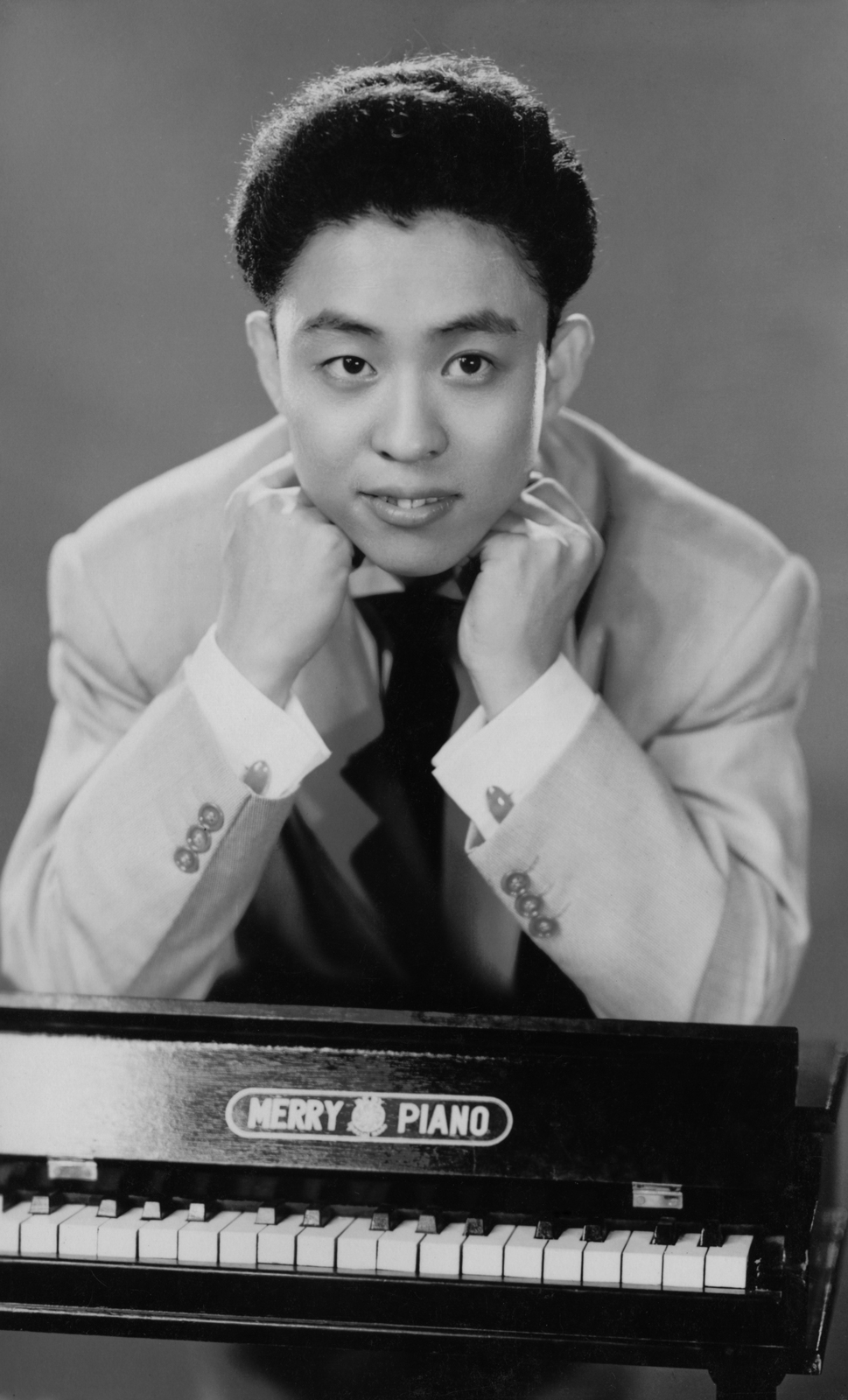
Already enjoying immense popularity before the group’s official formation, The Big Four immediately found themselves working at full capacity. They appeared at leading venues including the Nippon Theatre, Kokusai Theatre, Hibiya Public Hall, Shibuya Toho, and Shinjuku Shochiku. At night, they rushed from one U.S. military camp to another, often performing at five or six different locations before finishing well past midnight. After returning home at dawn, they spent the afternoons recording programs for NHK and Bunka Hoso before heading back to the theaters. In addition, they toured constantly throughout Japan.
Despite the punishing schedule, each member consistently earned more than ¥100,000 a month after the fees were divided equally. At a time when established jazz musicians typically earned around ¥25,000 a month and the average worker made only about ¥10,000, it is easy to imagine the extraordinary popularity of The Big Four. Their success marked the beginning of Japan’s first major jazz boom.
The Big Four operated without a manager. George Kawaguchi and Mitsuru Ono handled bookings and business affairs, Hachidai was responsible for all the arrangements and musical scores, and Hidehiko Matsumoto concentrated exclusively on performing. Matsumoto also designed the group’s distinctive stage costumes: wide-collared white shirts, bright red neckties, broad-shouldered white jackets with red pocket squares, tapered “mambo” trousers, and black-and-white patent leather shoes. The unmistakable “Big Four Style” soon became a fashion sensation across Japan.
“I remember one particular incident. The Big Four was headlining at the Kokusai Theatre in Asakusa when a representative from Honma Promotions in Hokkaido came backstage to negotiate a ten-day concert tour. George casually named his price—one million yen per person, four million yen for the group. In today’s terms, that would be roughly fifteen million yen for ten days’ work. True to their reputation, Honma Promotions came back the very next day carrying stacks of thousand-yen bills. The four members didn’t know whether to celebrate or panic. ‘Close the door!’ they shouted to the stagehand, and right there in the dressing room, they divided the money into four equal shares.”
— Jiro Kubota, Swing Journal, December 1966
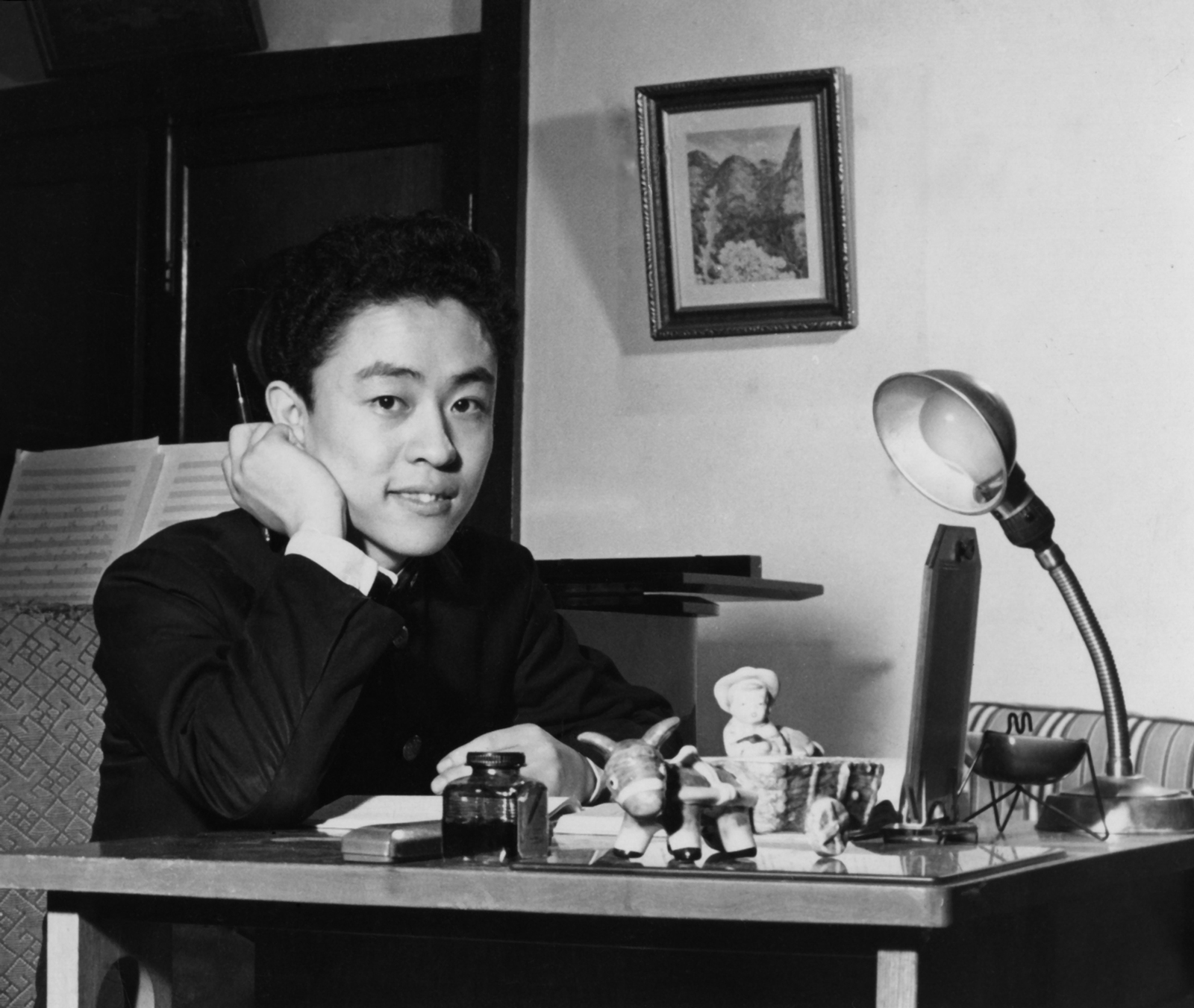
Although The Big Four remained extraordinarily busy, Hidehiko Matsumoto fell ill just before a tour of Hokkaido in the autumn of 1953, and Yasushi Ashida took his place. Matsumoto returned to his hometown of Okayama in January 1954 to recuperate, after which Ashida officially became a member of the group. Two months later, however, Mitsuru Ono left to form The Four Brothers, bringing the original Big Four to an end.
Hachidai and George Kawaguchi subsequently joined The Six Lemons All-Stars, They toured Japan with an outstanding lineup that included Teruo Yoda (tenor saxophone), Keiichiro Ebihara (alto saxophone), Fumio Matsumoto (trumpet), Tsuneo Yoshiba (bass), George Kawaguchi (drums), and Hachidai Nakamura (piano).
There have been various accounts of how The Four Brothers came into existence, but the most widely accepted explanation is that Hideo Shiraki’s older brother asked Mitsuru Ono to form a new group featuring his younger brother.
“His older brother was devoted to him. He told me, ‘As long as Ono and George are together, my little brother Hideo will never become Japan’s number one drummer. Please form a new band and give him a chance.’ So I brought together Yasushi Ashida, Hideo Shiraki, and pianist Shoichi Takami, and we formed The Four Brothers. George and I talked it over and agreed there wasn’t much else we could do. That was in 1954, so The Big Four lasted only about a year.”
— Mitsuru Ono, from Happy Jazz Talk by Tamaki Sawa
On December 23, 1954, Bunka Hoso launched Torys Jazz Game, sponsored by Kotobukiya (later Suntory). With Matsumoto now fully recovered and Tsuyoshi Ueda joining on bass, The Big Four returned as the program’s regular house band.
The weekly broadcast featured live performances by The Big Four, guest vocalists, and a quiz in which audience members tried to identify musical titles. The popular master of ceremonies was Roy James, while the scripts were written by a young Waseda University student named Rokusuke Ei. At the time, Ei and Hachidai knew each other simply as writer and performer; the celebrated partnership later known as the “6 & 8 Combination” had yet to begin.
“Good evening, ladies and gentlemen. I’m your host, Roy James. Every week at this time, Kotobukiya proudly presents Torys Jazz Game to jazz fans across Japan.
Tonight, we welcome music lovers from throughout the Kanto region to the Video Hall in Yurakucho, Tokyo, where you’ll enjoy thirty minutes of live jazz by our newly formed Jazz at the Torys band while taking part in our musical quiz.
Request any song you like, and our musicians will improvise it on the spot. If they cannot perform your selection, you’ll receive a complimentary bottle of Torys Whisky—or, if you prefer, Akadama Port Wine—with our apologies.
Now, allow me to introduce the members of The Big Four, who are ready to accept your requests…”
— Torys Jazz Game broadcast script
Unfortunately, Matsumoto fell ill once again, forcing the original The Big Four to suspend its activities. The remaining three members recruited alto saxophonist Akira Miyazawa and continued performing as The Big Four name, but by February 1957 the group had disbanded.
The legacy of The Big Four, however, did not end there. George Kawaguchi soon formed George Kawaguchi’s Big Four Plus One, featuring himself, Hidehiko Matsumoto, Sadao Watanabe (alto saxophone), Masao Yagi (piano), and Shinya Kimura (bass). Over the years, Kawaguchi continued to rotate the personnel, transforming the ensemble into a proving ground for Japan’s next generation of jazz musicians. Many future stars—including Takeshi Shibuya, Yosuke Yamashita, Masahiko Sato, and Hiromasa Suzuki—passed through its ranks.
Meanwhile, in 1955, Hachidai finally paid six years of overdue tuition before withdrawing from Waseda University. He had fallen behind simply because his professional career left him no time to attend classes. Another student with unpaid tuition was Rokusuke Ei, and the two often found their names posted together on the university bulletin board.
“On the wall to the left of the Student Affairs Office in the Faculty of Letters building, there was always a notice that read, ‘Mr. Hachidai Nakamura: Unless your tuition is paid by [Month][Day], you will be expelled.’ It appeared so often that I eventually began to wonder whether it wasn’t some new form of advertising.”
— Nobuhiko Kobayashi, Japanese Comedians
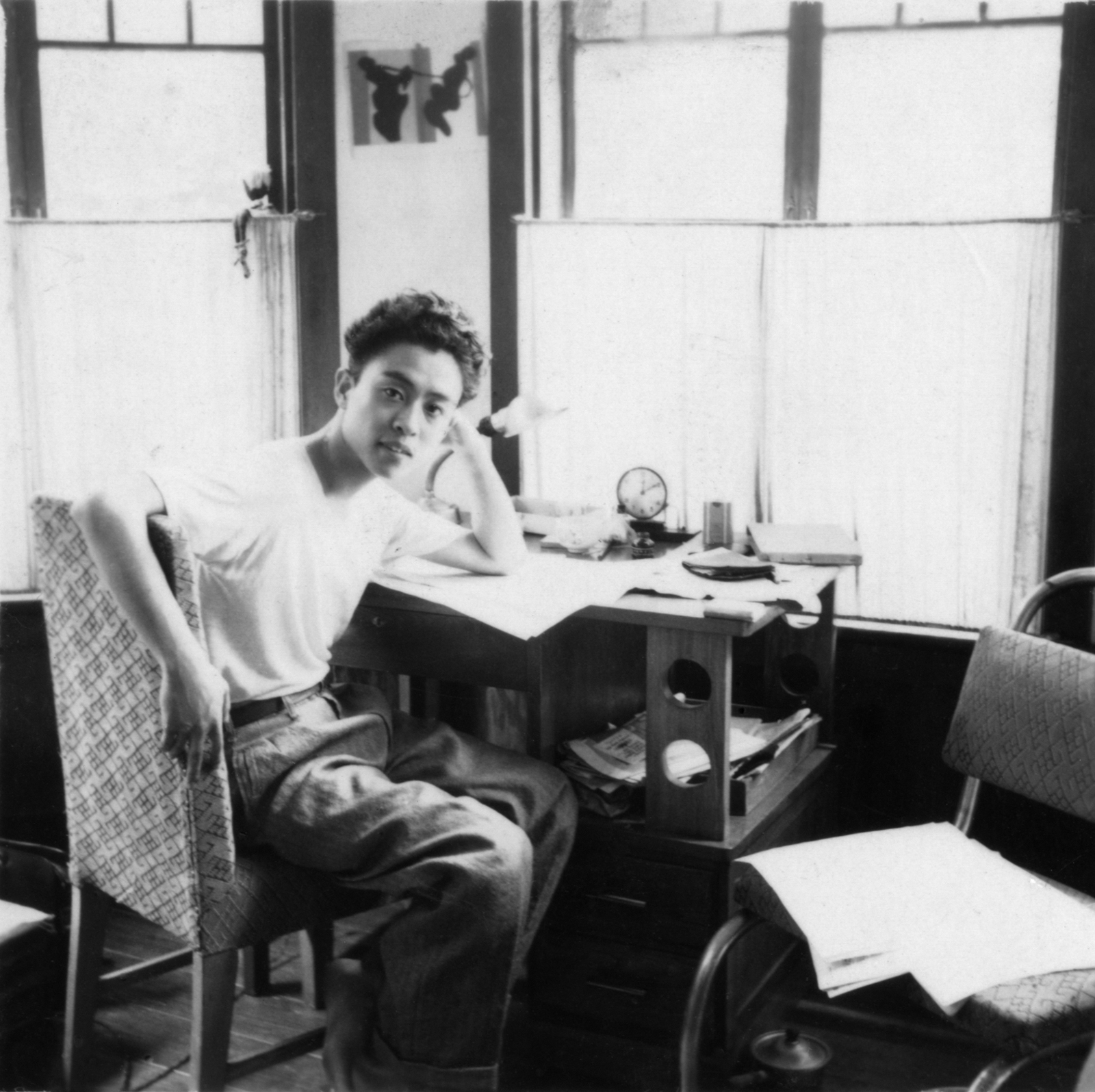
In 1958, Hachidai formed his own ensemble, the Hachidai Nakamura Modern Trio. The group consisted of two longtime musical associates: Isao Tsuboi on guitar and Keiji Nagai on bass. Additional musicians were invited as guest performers whenever the repertoire called for other instruments.
The trio began performing regularly at Club Samboa in Ginza and soon established itself as one of Japan’s leading modern piano trios, attracting widespread attention within the jazz community.
On June 5, Hachidai presented his first major recital, The Hachidai Nakamura Recital, at Sankei Hall. The recital featured an impressive roster of guest performers, including friends and fellow musicians such as George Kawaguchi and Seiji Hiraoka, as well as popular vocal groups and singers including Izumi Yukimura and The Dark Ducks. The program culminated in performances with the Tokyo Symphony Pops Orchestra conducted by Hiroshi Ishimaru, making the recital one of the most ambitious productions of Hachidai’s career to date.
No history of jazz, whether in the West or in Japan, can entirely avoid the subject of drug use. Driven by the belief that drugs could unlock new artistic inspiration, many musicians fell into addiction during this period. Hachidai, unfortunately, was no exception.
“You convince yourself that your mind is becoming clearer. But in the end, all creativity disappears. Life becomes nothing more than repeating the same cycle—trying to escape the agony that comes when the drugs wear off. The suffering of withdrawal is terrifying. As long as that fear exists, you simply can’t stop.”
— Mainichi Graph, November 25, 1962
Eventually, Hachidai resolved to free himself from addiction. To prevent himself from leaving the house, he asked friends to keep watch over him. He then confined himself to his room for two weeks, enduring the ordeal by taking repeated baths each day. After an exhausting struggle, he finally overcame the severe symptoms of withdrawal.
It was a mistake born of his overwhelming devotion to music, and in the end, it was that same passion that gave him the strength to reclaim his life.
By this time, the fervor of Japan’s postwar jazz boom had begun to subside. In its place, rockabilly was sweeping across the country.