
Biography 3
1959 — 1966 Creation
In 1959, through an introduction from Watanabe Productions, Hachidai was asked to compose several original songs for a rockabilly film audition. Although composing music came naturally to him, he had no lyricist with whom he felt comfortable working. Unsure what to do, Hachidai was walking alone through Ginza when he spotted a familiar face outside the Nippon Theatre. It was Rokusuke Ei, his junior from Waseda University. When Hachidai told him about the audition project, Ei readily agreed to help, and the two immediately headed to the Mita Tokyu Apartments, where Hachidai was living at the time.
“From eight o’clock at night until six the next morning, Ei wrote lyrics while I kept composing music. Once we had both finished, we laid everything out, arranging it from the brightest to the darkest. Then we began matching the brightest lyrics with the brightest melodies, and the darkest lyrics with the darkest melodies. We adjusted the wording, tried fitting the best lyrics to the strongest parts of the melodies, and experimented with different combinations. As we continued working, several good songs emerged, and among them was “Kuroi Hanabira”. … I think that song contained a lingering emotion that made me realize how deeply Japanese I was. For the first time, I felt I had created a song in which the spirit of Japanese popular song and Western popular music truly existed in harmony.”
The Toho film Seishun wo Kakero, starring Yosuke Natsuki, premiered on July 28. A youth film featuring rockabilly stars such as Keijiro Yamashita, Kyu Sakamoto, and Taro Seino, it included “Kuroi Hanabira” in one of Natsuki’s singing scenes. The actual vocalist, however, was the then little-known Hiroshi Mizuhara. Following the film’s success, Hachidai also contributed several pieces to its sequel, Ori no Naka no Yarotachi, released on August 4, including the arrangement of its theme song, “Renkan Blues.”
When “Kuroi Hanabira” became a major hit and received the inaugural Japan Record Award, the songwriting partnership of Ei and Hachidai attracted even greater public attention.
It was NHK television director Norihiko Suemori who next recognized the potential of the pair. Suemori proposed a new music program, appointing Ei as scriptwriter and Hachidai as musical director, and on October 6, Gogo no Oshaberi premiered (Tuesdays, 1:40 p.m., 20 minutes). The program would later evolve into Yume de Aimasho. Its cast included Hiroko Nakajima, Kiyoshi Atsumi, Tetsuko Kuroyanagi, and Norihei Miki. Hachidai Nakamura Modern Trio also appeared regularly, giving Hachidai the opportunity to showcase his brilliant piano playing on television.
From March 16 to May 26, 1960, Hachidai traveled abroad, spending twenty days in New York. During his stay, he attended Broadway musicals and stage shows while making frequent visits to jazz clubs in Harlem. He became a regular at clubs that stayed open from midnight until dawn, joining jam sessions with Black musicians. Only later did he learn that these clubs had been dangerous places frequented by gangs. While in New York, he was invited by Charles Mingus’s manager to remain there and pursue a professional career, and he also performed with the combo led by the pioneering avant-garde jazz musician Ornette Coleman.
After returning to Japan, Hachidai was inspired to compose. He began writing instrumental works and, as soon as they were completed, headed into the recording studio. The recording sessions were completed in a remarkably short time, and the resulting album, Memories of Lillian, was released. The trio featured Hachiro Kurita on bass and Jimmy Takeuchi on drums.
On April 8, 1961, Yume de Aimashou finally premiered (Saturdays, 10:00 p.m., 30 minutes), marking the beginning of an exciting weekly live broadcast. Opening with title graphics designed by Sho Yoshimura, the program featured Hiroko Nakajima’s unpretentious hosting, Tetsuko Kuroyanagi’s lively conversation, comedy sketches by Kiyoshi Atsumi, Norihei Miki, and Kanichi Tani, and distinguished international guests including Alain Delon, Sylvie Vartan, and Trio Los Panchos. These varied attractions soon made it one of the nation’s most popular television programs.
Musical segments featuring original songs and dance performances also became one of its defining characteristics. In particular, the songs written for the monthly feature “Song of the Month” became beloved by viewers across Japan. The program received such an overwhelming number of postcards that it began offering free sheet music to its audience. Hachidai served as musical director, appeared regularly with Hachidai Nakamura Modern Trio, and occasionally revealed a natural flair for comedy worthy of the comedians with whom he shared the stage.
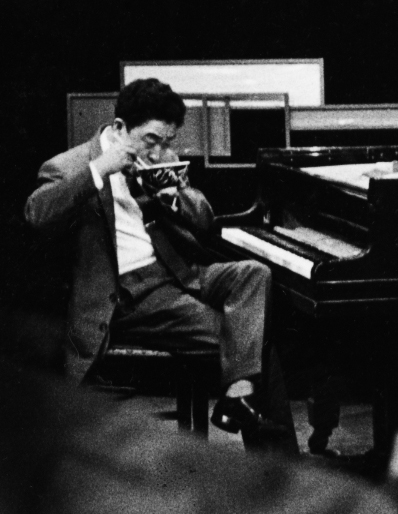
On July 21, The Third Hachidai Nakamura Recital, presented jointly by Bunka Hoso and Watanabe Productions, was held at Sankei Hall. The recital was divided into two parts—instrumental and vocal performances—under the subtitles You and the Night and the Music.
The first part centered on performances by Hachidai Nakamura Modern Trio, joined by Akira Fukuhara (trumpet), Sadao Watanabe (alto saxophone), and Chico Kikuchi (drums). The program also featured the Japan Philharmonic Orchestra conducted by Hiroshi Ishimaru and Toshiyuki Miyama and His New Herd. Standard works such as “How High the Moon” and “Ebb Tide” were presented with Hachidai’s remarkable sense of tonal color and masterful orchestral arrangements. This first half of the recital was later released by Toshiba Records in September as the album You the Night and the Music.
The second part brought together singers and entertainers closely associated with Hachidai for a dream performance on a single stage. In order of appearance, the performers were Chiemi Eri, The Peanuts, Kayoko Moriyama, Hiroshi Mizuhara, Takashi Yamada, Masako Tani, The Duke Aces, Yoshiko Ishii, Kyu Sakamoto, Yoshinobu Kuribayashi, Taro Furukawa, Norihei Miki, Yoshie Mizutani, and Yuzo Kayama, with Miki Irie serving as master of ceremonies. Most of the songs performed had been written especially for this recital, and “Ue Wo Muite Arukou”, sung by Kyu Sakamoto, received its first public performance on this occasion.
On June 26, 1962, Hachidai married Junko Onikura.
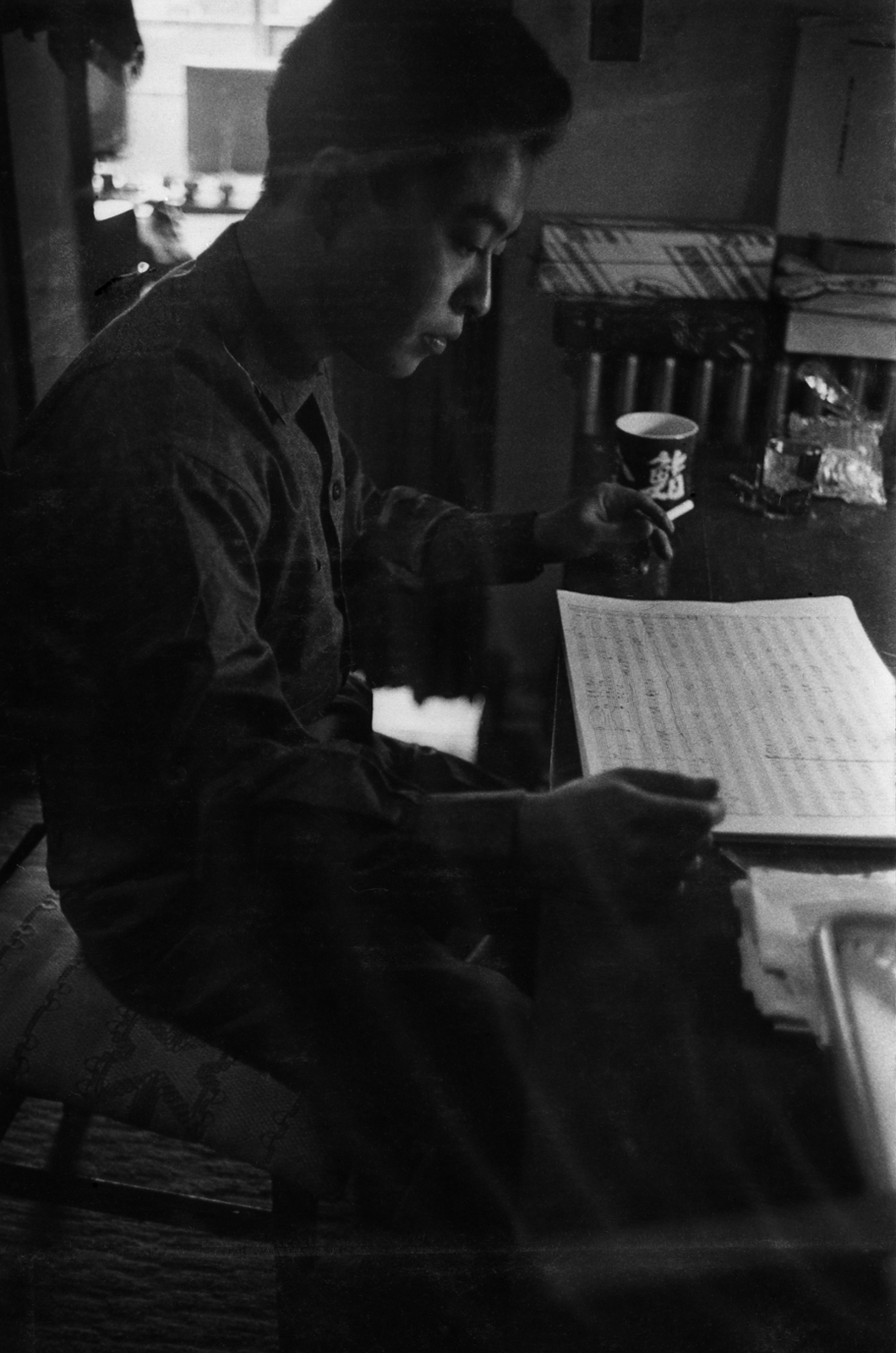
“My husband never composed while sitting at the piano. In fact, he hardly used the piano at all. Occasionally, he would check a chord or two, but otherwise he would sit at his desk and write directly onto manuscript paper. Once a composition was finished and the music had taken shape, he would record it—back then, on those large reel-to-reel tapes. Then he would listen to it himself. If he liked what he heard, he would play it over and over again, drinking while listening to his own music.”
— Junko Nakamura
Meanwhile, Hachidai continued to perform regularly at Samboa. More than anything else, this reflected his determination to remain, first and foremost, a pianist—a conviction that never changed throughout his life. No matter how busy he became with television programs or recording sessions, he still spent his evenings performing at the club. At times, however, the relentless schedule took its toll on his health, and when he was unable to appear, a young pianist who greatly admired him filled in. That young musician was Kunihiko Suzuki, then a member of Mickey Curtis and the City Crows. The two had first met years earlier, during the days of The Big Four, when Suzuki, still a junior high school student, visited Hachidai’s home. Thereafter, Suzuki would occasionally play the piano for Hachidai, who in turn taught him the art of arranging.
“Actually, before me there was Keitaro Miho, who also studied under Hachidai. He was my senior at Keio University, a pianist, and a genius. He, too, had simply shown up at Hachidai’s door, so if anyone could be called Hachidai’s first disciple, it would probably be Miho. In that sense, perhaps Miho and I were his disciples. But it wasn’t like the old apprenticeship system in the popular music world, where you were made to scrub floors. He respected us and guided us. It was more like a relationship between brothers.
Hachidai Nakamura was the one person who made me think, ‘I want to become someone like him.’ That’s why I became a pianist, an arranger, and a composer.”
— Kunihiko Suzuki
Before long, drummer Chico Kikuchi joined Hachidai Nakamura Modern Trio, expanding it into a quartet, and Suzuki soon became a member as well. He performed piano duets with Hachidai and also played the melodica and vibraphone. Beginning in May 1963, the group adopted the name The Hachidai Nakamura Quintet. In addition to television appearances and recording sessions, the ensemble toured extensively throughout Japan. Their repertoire centered on popular music from around the world and Hachidai’s own compositions, while also embracing local folk songs unique to each region they visited. Even when he encountered a melody he had never heard before, Hachidai needed only to have an audience member hum the opening few measures. He would immediately write out the parts for every instrument and have the quintet perform the piece on the spot. His determination to satisfy every audience request, no matter how challenging the music, undoubtedly reflected the flexible approach to music he had learned in childhood from his mentor, Da Karl Hertz, in Qingdao.
Whenever the group had time between performances—whether during breaks between concerts or late at night—Hachidai would shut himself away, working on arrangements. Watching him constantly at work, Suzuki absorbed Hachidai’s remarkable musical instincts while assisting with those arrangements.
“One day he said to me, ‘Kun-chan,* if you want to preserve this melody, I think you should change the harmony. But if you really like this harmony, then you should change the melody. These two don’t work together. Which is more important to you?’ He actually asked someone as inexperienced as I was to decide what I valued more. In other words, he respected my own musical ideas. We were together every night… and I learned an incredible amount from him.”
— Kunihiko Suzuki
Around the time Hachidai Nakamura Quintet was formed, unexpected news arrived from overseas. Kyu Sakamoto’s “Ue Wo Muite Arukou” had been released internationally under the title “Sukiyaki” and reached No. 1 on both the Billboard and Cash Box charts in the United States. Let us now trace how this unprecedented achievement in the history of Japanese popular music came about.
The story began in the autumn of 1962, when Louis Benjamin, president of Britain’s Pye Records, visited Japan on a promotional tour. During his stay, he heard “Ue Wo Muite Arukou” and took Sakamoto’s single back to England. Convinced that the song had hit potential there, he decided to have Kenny Ball and His Jazzmen record it and release it as a single. Finding the original Japanese title difficult for Western audiences to remember, he renamed it “Sukiyaki,” inspired by the sukiyaki dish he had eaten in Asakusa.
Kenny Ball’s version, with its exotic flavor, rose to No. 10 on the UK Singles Chart. In the United States, Capitol Records, having heard of its success, released Sakamoto’s original recording under the title “Sukiyaki.” It entered the Billboard chart at No. 79 in the issue dated May 11, 1963. Week after week, it climbed steadily, finally reaching No. 1 in the June 15 issue. Sakamoto’s original recording was subsequently released in the United Kingdom as well, where it eventually peaked at No. 6. It was then issued in more than thirty countries around the world, including France, Italy, the Netherlands, Spain, Germany, Mexico, Brazil, Hong Kong, India, and South Africa.
In this way, Hachidai’s melodies spread across the world almost overnight.
Toward the end of 1963, “Konnichiwa Akachan,” written to celebrate the birth of his eldest son, Rikimaru, in June of that year, received the 5th Japan Record Award.
On March 2, 1964, Bunka Hoso launched Hachidai Asa no Uta, which aired Monday through Saturday. The program was recorded before a live audience, one week’s worth of episodes at a time, with a different guest singer featured each week. Its distinctive appeal lay in the unexpected combinations of performers and songs, including newly written compositions by Hachidai and interpretations of existing works by singers other than those who had originally recorded them. Many of the songs featured on the program were never commercially released, making it a rare opportunity to hear unusual and little-known works by Hachidai. At the same time, the assured performances of singers such as Fubuki Koshiji and Mieko Hirota gave many office workers an uplifting start to the day before they left for work.
On July 6 and 7, The Works of Hachidai Nakamura (Tokyo Mixed Chorus Composers Series No. 1) was presented at Ueno Bunka Kaikan Hall. The first part featured incidental music based on Edgar Allan Poe’s The Masque of the Red Death, directed by Hideo Kanze. The second part featured Gara Gara, with poetry by Shuntaro Tanikawa and direction by Takeo Matsuura. The third part, entitled The Best of Rokusuke and Hachidai, consisted of a selection of their hit songs and was directed by Norihiko Suemori.
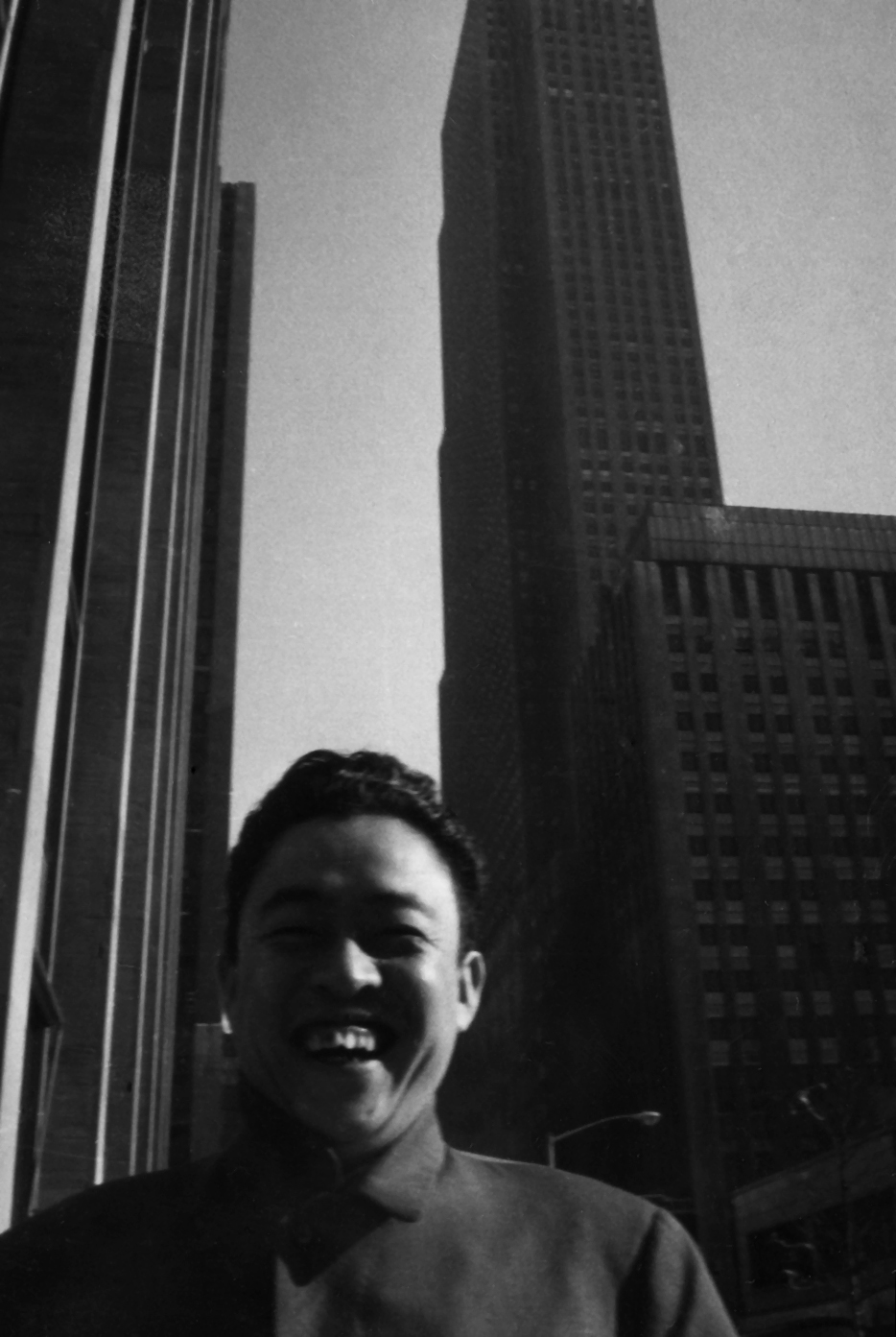
While appearing on weekly television programs, touring with his Quintet, composing popular songs and film scores, and arranging music for the stage, Hachidai led an extraordinarily busy life. Hoping to live abroad with his family, he moved to New York at the end of July. On October 15, his eldest daughter, Satoko, was born.
During his stay in New York, Hachidai entrusted his Quintet to Isao Tsuboi. Kunihiko Suzuki left the group to form his own trio and was succeeded by Shunshiro Kuramoto (piano). On drums, Chico Kikuchi was replaced by Shoji Nagashiba, while Keiji Nagai was succussed on bass by Kimio Koizumi.
“My life now is organized around a schedule that repeats every single week. On top of that, I’m completely occupied with concert tours. If I were to accept every composition request that came my way, there would be no end to it. Yet whenever an offer comes, I find myself thinking about how much it will pay. At the same time, if I turn it down, I can’t shake the fear that the work might disappear altogether.
To break free from this endless cycle, I need to get away for at least a year. Besides, I want to devote myself to a project that takes one or even two years to complete. One of the reasons I wanted to go to America was to discover what kind of work was worth devoting that much time to.”
Even so, few people could understand why Japan’s busiest composer would choose to live overseas for an entire year, especially at a time when the exchange rate was fixed at 360 yen to the U.S. dollar. Suspecting that there must be some hidden motive, the press quickly sought him out for interviews. Hachidai, however, had no secret strategy. Wearing his usual carefree smile, he simply spoke about his love of music.
Life in New York proved immensely fulfilling. Almost every day, Hachidai went alone to the theater or the cinema, and in the evenings he frequented clubs offering live music. Deeply impressed by the French film Les Parapluies de Cherbourg, which had just opened in the United States, he thereafter made its main theme a staple of his concert repertoire. Many friends also visited the family’s apartment, among them Misa Watanabe of Watanabe Productions, actress Tomoko Matsushima, singer Nancy Umeki, arranger Kosuke Onozaki, and conductor Seiji Ozawa. He limited his work in Japan to providing musical scores for Yume de Aimashou, NTV’s Ashita ga Aru Sa, and Hachidai Asa no Uta. For Hachidai, this became the first extended period of creative renewal in his career.
When he returned to Japan in June 1965, his hectic schedule resumed. Unlike before, however, Hachidai had gained an inner composure from his time abroad. During this period, he released the album Japanese Melodies, which was later issued in the United States, as well as “Kaerokana”, an unusual collaboration with Saburo Kitajima.
On October 17, The First Light Music Concert: With Hachidai Nakamura was presented at Kyoritsu Auditorium. Organized by the American Culture Society of Keio University, the recital featured performances by university bands, together with appearances by Rokusuke Ei, Tetsuko Kuroyanagi, and Yuzuko Kokonoe, and was warmly received by the students.
In January 1966, Hachidai composed the music for the musical Treasure Island, performed at the Nissay Theatre. It was Shintaro Ishihara’s second original musical, following Honoo no Curve (April 1965), and attracted considerable attention for its co-starring performances by the Johnnys and Michiyo Azusa. Ishihara had originally asked Hachidai to compose the music for Honoo no Curve as well, but the project had not materialized because Hachidai was then living in New York.
On September 26, his second daughter, Hanako, was born.
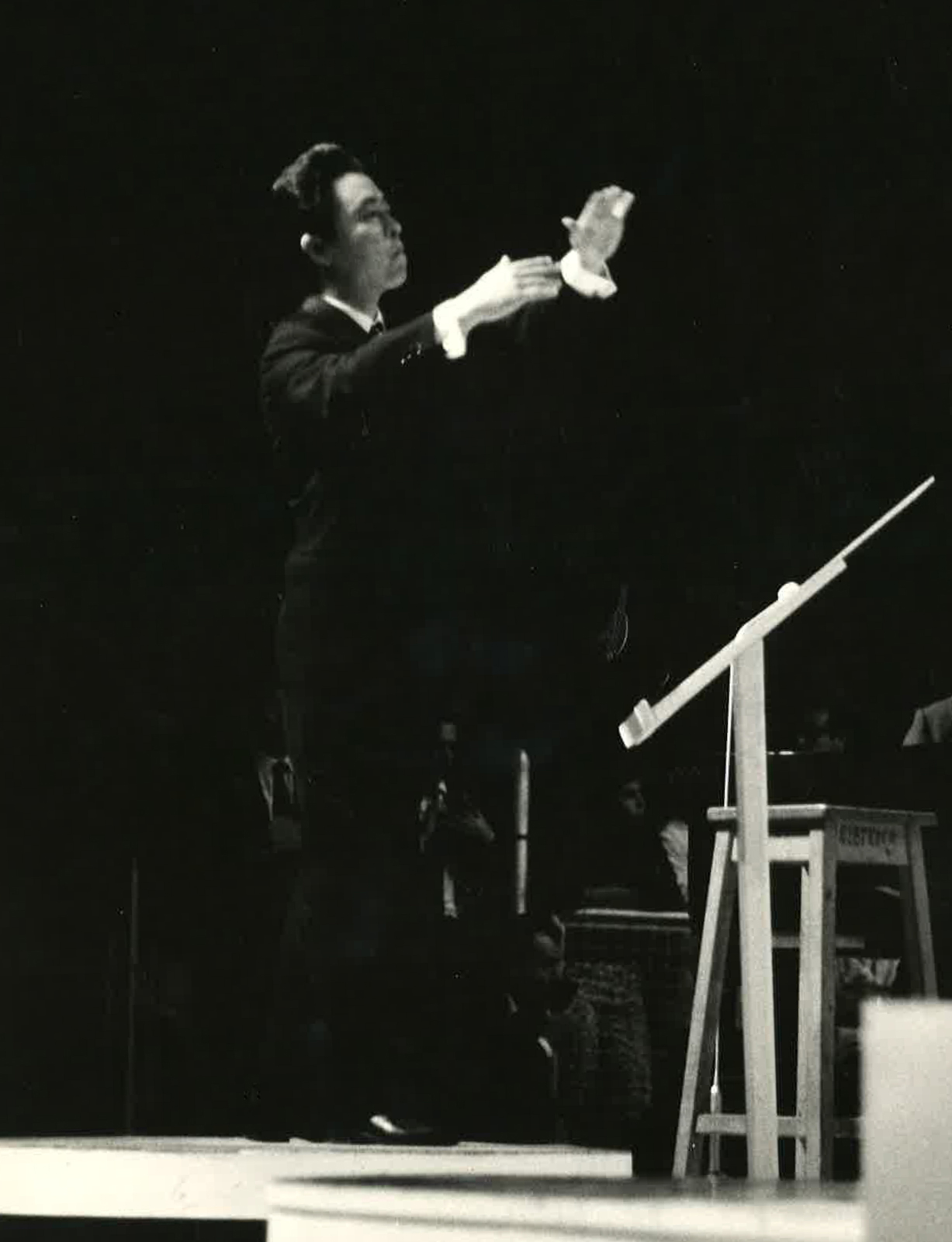
In October 1966, Hachidai entered “Watashi Dake no Anata,” sung by Chiemi Eri, in the First Rio de Janeiro International Song Festival, held in Brazil. Performing before an audience that included such distinguished figures as Henry Mancini, Eri delivered the song with remarkable poise and captivated listeners with her exceptional expressiveness. When the judging was complete, Eri received the Best Vocal Performance Award, while Hachidai was honored with the Best Orchestral Arrangement Award. The following year, Hachidai was invited to serve as a judge at the festival. In 1968, he entered “Sayonara Sayonara,” performed by Kyu Sakamoto, which also won an award.
That same year, Hachidai Asa no Uta came to an end on January 8, followed by Yume de Aimashou on April 2. The times were unmistakably changing.