
Biography 1
1931 — 1948 Birth
Hachidai Nakamura was born on January 20, 1931, in Qingdao, China. Following World War I, Qingdao came under Japanese administration. Originally a German colony, it was a beautiful city lined with European-style buildings and acacia trees.
Hachidai’s father, an elementary school principal, was deeply committed to education and held progressive views. Their home had a German-made piano, a hand-cranked gramophone, and a collection of 78 rpm records. His older sister Kazuko, who was four years his senior, was taking piano lessons, and Hachidai often placed a chair beside her and imitated her at the piano. One moment he would be riding a two-wheeled toy around the spacious entrance hall; the next, he would be playing noisily on the piano in the drawing room.
When he was in the third grade, a piece of music on the radio caught his attention. He instantly memorized the melody and hurried to a record store, where he discovered it was the fourth movement of Dvořák’s Symphony No. 9, From the New World. It became the first record he ever bought on his own.
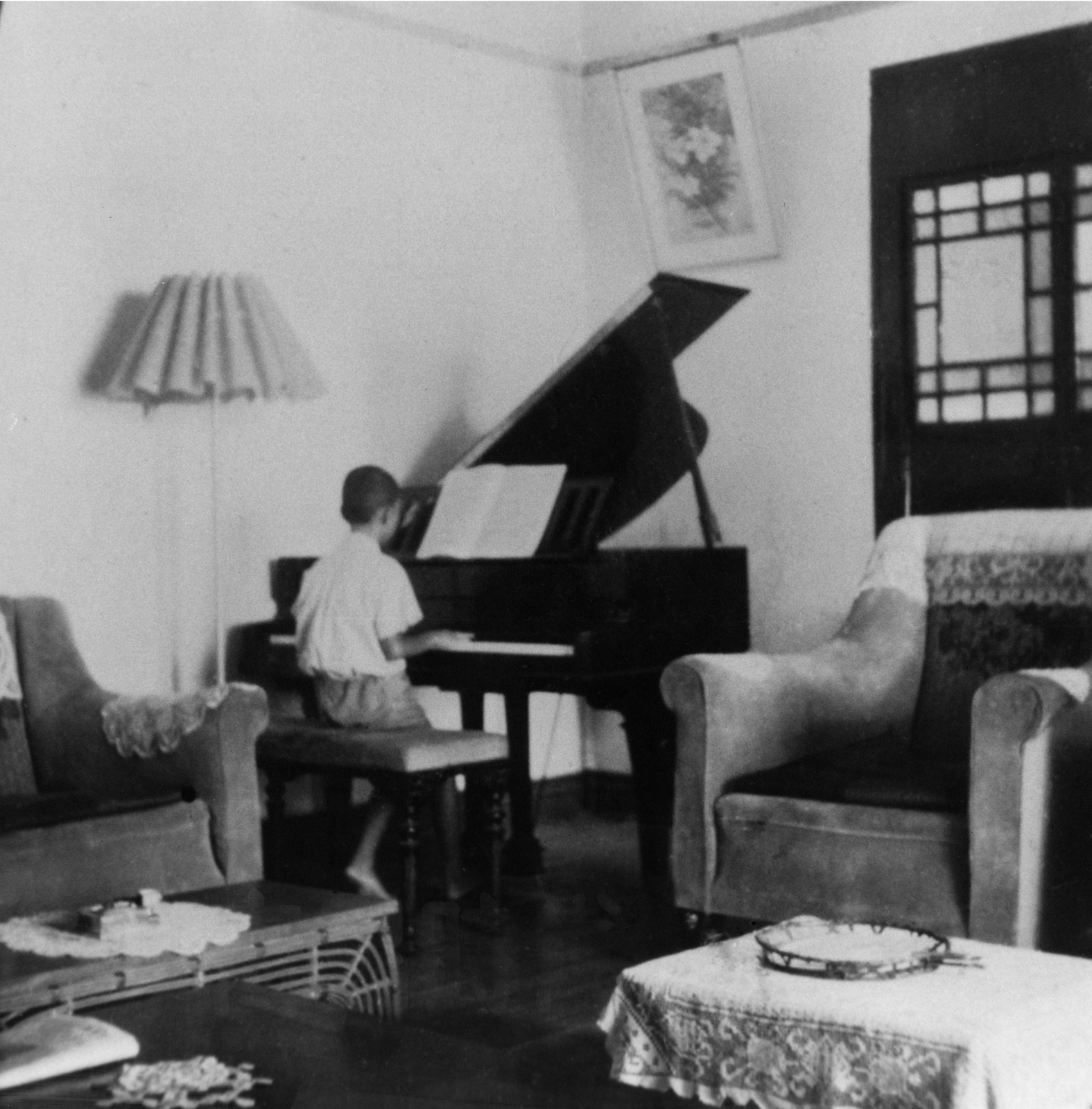
To nurture their son’s musical talent, his parents invited Shinada, a music teacher at Qingdao Girls’ School, to give him piano lessons in the autumn of 1940, during his third-grade year. Hachidai completed the entire Beyer method in just three months, astonishing everyone around him with his remarkable talent.
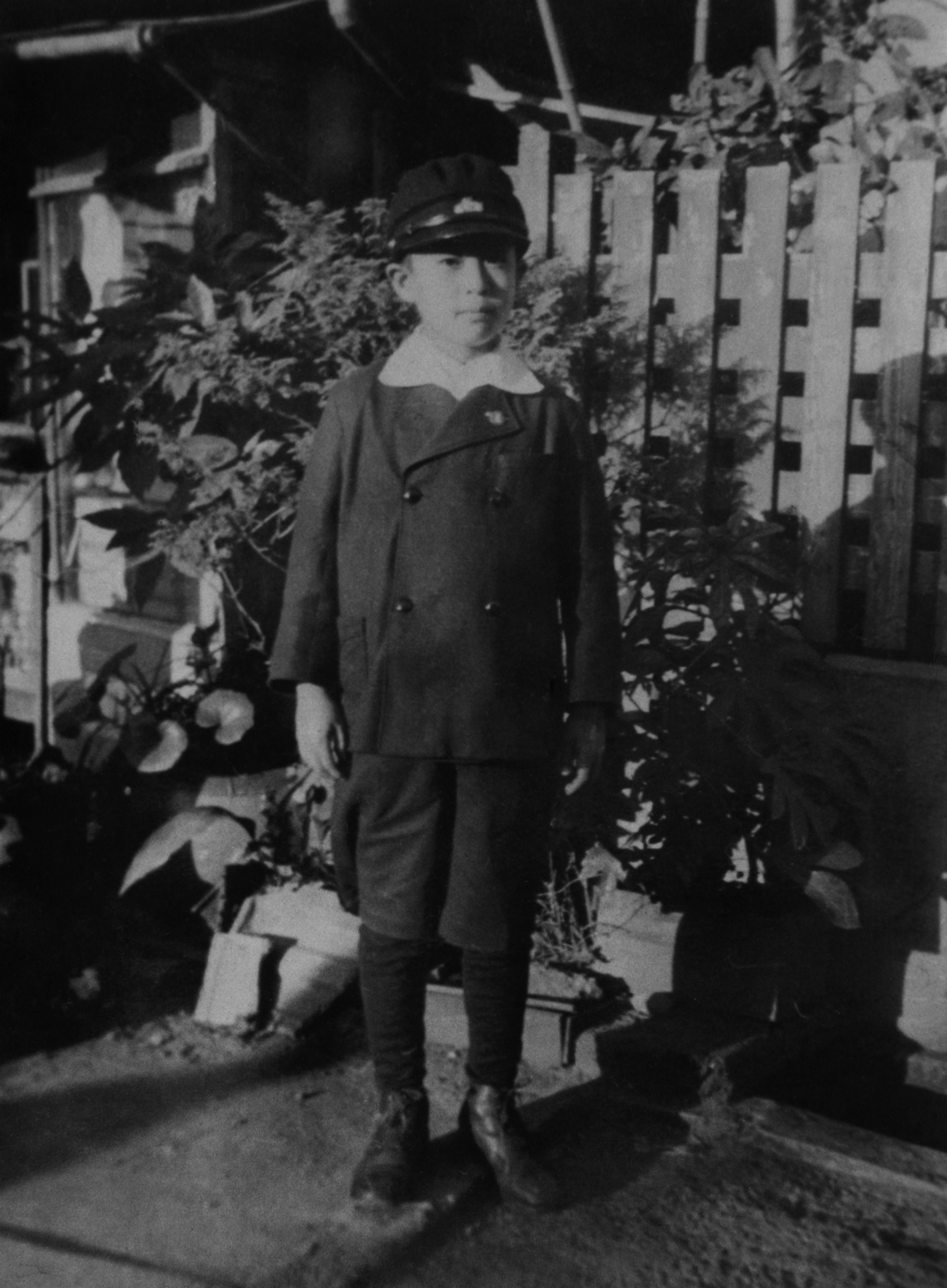
Hoping to provide him with a better musical education, his parents considered sending him back to Japan. They decided to place him in the care of acquaintances who ran a sewing workshop in Waseda-Tsurumakicho, Tokyo. During the summer vacation of his fourth-grade year, Hachidai traveled alone by ship to Tokyo on a journey that took two nights and three days. The address of his acquaintances’ home was written in large letters on the school satchel strapped to his back.
This was shortly before the outbreak of the Pacific War. While attending Waseda National Elementary School, Hachidai also enrolled in the Children’s Music School affiliated with the Tokyo Music School, now the Tokyo University of the Arts. He attended classes there twice a week, on Wednesday and Saturday afternoons.
Among the older pupils at his elementary school was Yoshitaka Akimitsu, who would later become a pianist. Both boys played the piano at school performances. Records also indicate that, around this time, Hachidai appeared with a boys’ choir in Roppa Furukawa’s film Ongaku Daishingun.
His regular piano teacher was an elegant young woman, and he always enjoyed her lessons. However, the lessons he occasionally observed in the school’s main department were exceptionally strict and demanding. The young women at the piano attacked the keyboard with fierce intensity, their faces tense with concentration. To Hachidai, it seemed as though they were competing to see who could play the most notes in a single second, or even training for the Olympic Games. He felt there was little true musicality in their performances.
Before long, in addition to attending the Children’s Music School, Hachidai began taking private lessons in piano and composition from Shinichi Takada. There, he spent many enjoyable hours listening to symphonies while following the scores and discussing music.
Around this time, Hachidai saw a performance by the Takarazuka Revue and was captivated by the brilliant music rising from the orchestra pit. He memorized the melodies as they were performed and played them again on the piano when he returned home.
He continued visiting the theater once or twice a month with a guardian, but even that was not enough to satisfy him. Before long, he began skipping school and making his way to the theater district on his own.
At the time, Yurakucho regularly hosted performances by the Enoken troupe, the Roppa Furukawa troupe, and many other theatrical companies. Unable to resist the attraction of the stage, Hachidai secretly took coins from his aunt’s savings box, pretended to go to school, and instead spent his days at theaters in Yurakucho, Asakusa, and Shinjuku. His deception, however, was soon discovered.
Among Hachidai’s classmates were the brothers Somenosuke and Sometaro Ebiichi, who would later become well-known entertainers. Hachidai was especially close to Sometaro, who shared his interests and often visited his relatives’ home in Tsurumakicho.
There was a cardboard model of the Takarazuka stage on top of his desk, and we’d talk about the revue while pretending to dance. I remember it so clearly. When I returned to school after the summer vacation, he had probably already gone back to Qingdao. Before he left, he gave me a book by Koroku Sato.
We were very close. We both had buck teeth, you know.
—Sometaro Ebiichi, quoted in Rokosuke Ei’s Six, Eight, Nine—The Nine
In 1943, while Hachidai was in the sixth grade, he wrote “composer” as his future profession at school, despite Japan being at war. At a time when nearly every boy in his class wrote “soldier,” his teacher scolded him, and some of his classmates even called him unpatriotic. During the summer vacation that year, Hachidai returned to Qingdao.
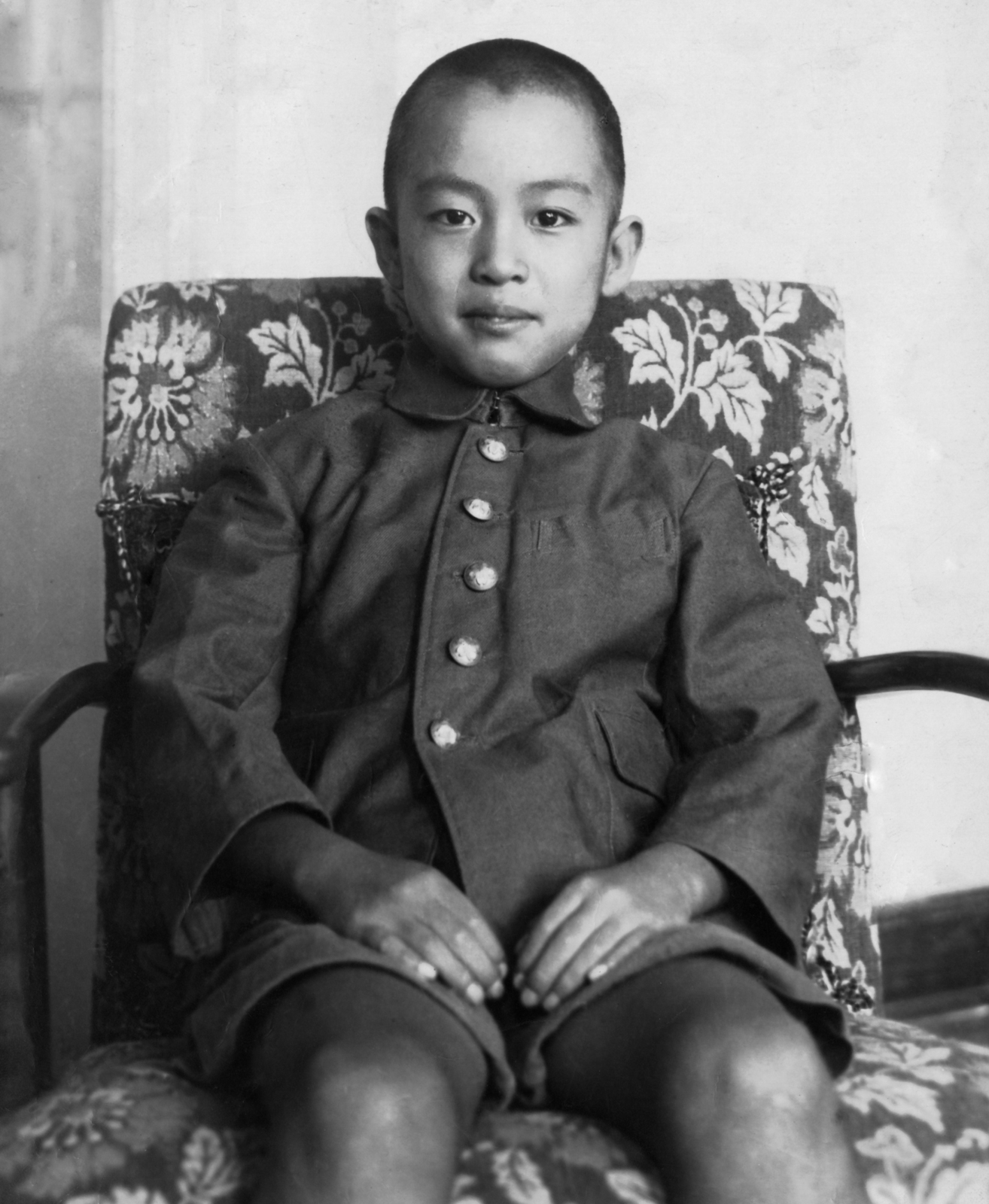
Back in Qingdao, a life-changing encounter awaited him. There he met Da Karl Helz, a Jewish German music teacher. A graduate of the Vienna Conservatory, Helz came from a distinguished family. But because he was Jewish, he had been forced to flee his homeland and had taken refuge in Qingdao.
Helz gathered students at his home and gave them private lessons, and before long Hachidai began studying with him. Although they shared no common language, Helz’s teaching and playing clearly conveyed his love of music. Through Helz, Hachidai came to appreciate the greatness of classical music, especially the beauty of melody.
One day, Helz was invited to perform at a Japanese officers’ club, and Hachidai and his sister Kazuko were allowed to attend. What he played was neither Beethoven nor Chopin, but the Japanese melodies “Kojo no Tsuki” and “Sakura Sakura.”
His fluid arrangements preserved the spirit of the original melodies while showcasing his gift for improvisation, captivating everyone in the audience. The performance was so noble and beautiful that it left a deep impression on all who were present.
On the way home, Kazuko noticed that Hachidai was holding her hand tightly, overcome with excitement. In that small gesture, she sensed both his admiration for Helz and his profound respect for music as a form of human expression.
Today, people often speak of the importance of improvisation, but to witness a great classical musician of that era perform with such extraordinary spontaneity left an overwhelming impression on me. I remember shedding more tears that day than on almost any other occasion in my life. It was at that moment that I vowed to dedicate my life to music.
In the autumn of 1944, the entire family returned to Japan. Before they left, Helz wrote Hachidai a letter of introduction to Joseph Rosenstock, then conductor of the New Symphony Orchestra.
Founded during the Taisho era, the New Symphony Orchestra would later become the NHK Symphony Orchestra. Rosenstock had served as its conductor since September 1936. He and Helz had been close friends since their days at the Vienna Conservatory and remained close despite living far apart in Japan and China.
At the time, the New Symphony Orchestra’s concertmaster was violinist Moritsuna Kuroyanagi, father of actress and television personality Tetsuko Kuroyanagi.
The family settled in Tsufuku-Honmachi, Kurume, Fukuoka Prefecture, where Hachidai’s grandmother lived. All six members of the family moved into her home together. The house was a traditional Japanese farmhouse with a thatched roof. Although Hachidai was initially surprised by the change in surroundings, he quickly adapted, as children often do.
What I enjoyed most about our life in rural Tsufuku-Honmachi was the communal bathhouse just a few minutes’ walk from our home. It was unlike an ordinary public bathhouse. Jointly operated by several dozen farming families, it cost almost nothing to use and opened at five o’clock every evening. During the first hour or two after it opened, the small bathhouse became the perfect place for the elderly and local children to gather and enjoy themselves.
On August 15, 1945, during the summer vacation of his second year at Meizen Middle School (now Meizen High School), Hachidai listened to the Emperor’s surrender broadcast on the family’s crackling radio at their home in Kurume.
Life became increasingly difficult after the war, but Hachidai was finally able to practice openly every day on the piano he had previously played only in secret. He loved its sound.
Before long, restrictions on American culture were lifted, and the Far East Network began broadcasting jazz and popular music. Hachidai built his own crystal radio and eagerly listened to the broadcasts.
Power shortages frequently caused blackouts, but at such times the crystal radio, which required no electricity, proved especially useful. Hachidai also often played the piano in complete darkness, relying solely on the sound of the keys. This experience would later prove invaluable in his improvisational performances.
American occupation forces were eventually stationed in Kurume. Like many other children, Hachidai received chewing gum and chocolate from the soldiers. At night, however, he would gather his friends, climb onto the earthen wall beside the military compound, and listen to the blues drifting from the saxophone played inside.
From that mysterious world of music—blackouts, a crystal radio, and the sound of a saxophone drifting from the American military club—my dreams took flight, soaring ever higher into the sky.
Around this time, a wide variety of American films, including comedies and musicals, began to be shown in Japan. Hachidai visited nearly every cinema in and around Kurume and soon became captivated by the world of film.
He was particularly moved by the film Rhapsody in Blue. The title piece and its composer, George Gershwin, became major sources of musical inspiration for him.
One day, while Hachidai was playing the piano at the home of the relatives with whom he was staying, he noticed a boy peering over the hedge with great interest. The boy was Shiro Honma, an older student at Meizen Middle School who would later conduct the Kurume Music Association Choir.
During his school days, Honma was known as a rough and unconventional student. Yet beneath that exterior, he was a sensitive young man with a deep love of music. He was deeply moved by the elegant melodies Hachidai played and was immediately drawn to his remarkable talent.
From that day onward, the two bonded over their shared love of music, and their friendship lasted a lifetime.
At Honma’s invitation, Hachidai joined the school choir. Before long, the choir’s reputation spread to other schools, and music teachers began sending their students to join. It eventually grew into a large mixed choir that included female students.
The choir was well received wherever it performed. It toured schools in Yanagawa, Omuta, Miike, and other nearby towns, presenting varied programs that included violin solos and soprano performances.
Through these activities, Hachidai made many friends who shared his passion for music. Whenever a pianist was needed, he also performed with groups such as the Bridgestone Light Music Club in Kurume.
By 1948, Hachidai had become fully accustomed to life in Kurume and was thoroughly enjoying his school days. That autumn, a major three-day cultural festival was held. Fortunately, the program booklet has survived, allowing us to reconstruct the events that took place.
The teachers did not interfere with the program in any way. Everything was organized and presented by the students themselves.
The first day featured a classical concert. Hachidai performed Beethoven’s Appassionata Sonata on the piano, while the choir sang the “Hallelujah” Chorus and “The Wandering People.”
The second day was devoted to drama. During productions including The Death of Domo Mata, Hachidai sat at a piano behind the stage and provided improvised accompaniment.
The third day featured a singing contest, which appears to have been the festival’s most popular event. Hachidai accompanied every contestant. In addition to playing the piano, he performed a parody of Shizuko Kasagi’s “Secondhand Girl,” changing both the title and the lyrics to create “The Failed Student Monk.” It remains one of the most delightful episodes of his youth.
One day, the composer Ichiro Tone came to Kyushu with the popular singer Minoru Obata and others to entertain workers in the coal-mining districts. Hachidai’s older brother Jidai was performing with the troupe as a part-time musician, and Hachidai joined them for the tour, traveling through the coal-mining towns of Kyushu.
He played popular songs of the day, including “Hoshi no Nagare ni,” in large tatami rooms and other similar venues.
Incidentally, a young man who was visiting Kyushu with his father happened to hear Hachidai perform Rhapsody in Blue and was astonished by the expressive power of his playing. That young man was Ichiro Uno, who would later become a composer best known for works including Hyokkori Hyotanjima.
The mining towns were thriving in those days, and the interaction between the performers and the audiences was wonderful. I remember those days with great fondness.
Although we speak of “music” as if it were a single thing, it embraces countless forms, from Western classical music to traditional Japanese folk songs. Even as a child, I came to understand that music should never be separated from the people it is meant to reach.